
Starting from the stunning island of Agusta in Raja Ampat—where we are staying at the charming Agusta Eco Resort—we set out in search of various species of seahorses.
They belong to the genus *Hippocampus* and the family Syngnathidae. There are currently 54 known species of saltwater fish commonly called seahorses (*hippocampus*), because its head looks like a horse’s.

All members of the genus *Hippocampus* share the same physical characteristics. Unlike most other fish, they grow vertically rather than horizontally. Consequently, they maintain an upright posture, although they adopt a more hydrodynamic position—with their heads facing forward—when swimming.
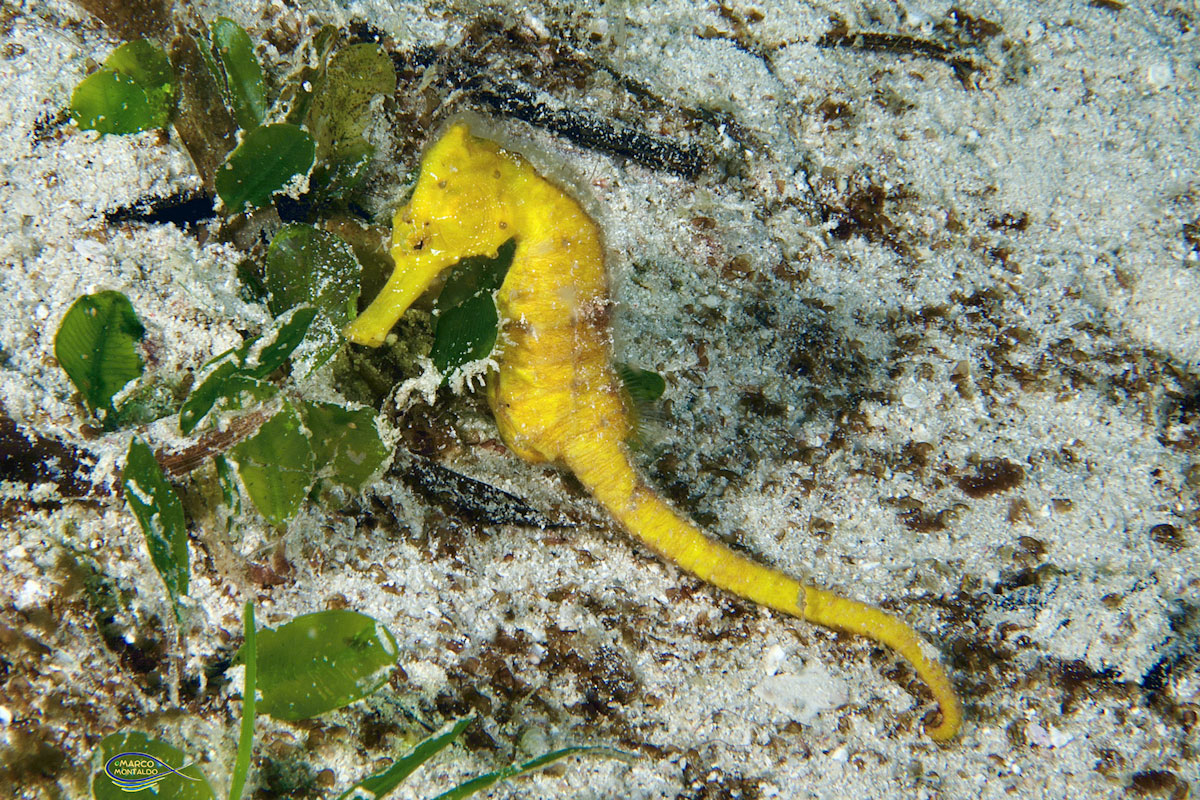
Their necks curve forward, and—with a little imagination—their heads resemble a horse’s muzzle, featuring an elongated, tubular mouth. Their pectoral fins are located just behind the gill openings and are shaped like equine ears. Their backs are relatively straight and feature a dorsal fin, while their bellies are rounded. The tail is an extension of the body; it is mobile and prehensile, used both for movement and for anchoring to the seabed or seaweed. When swimming, the tail is often curled up on itself.
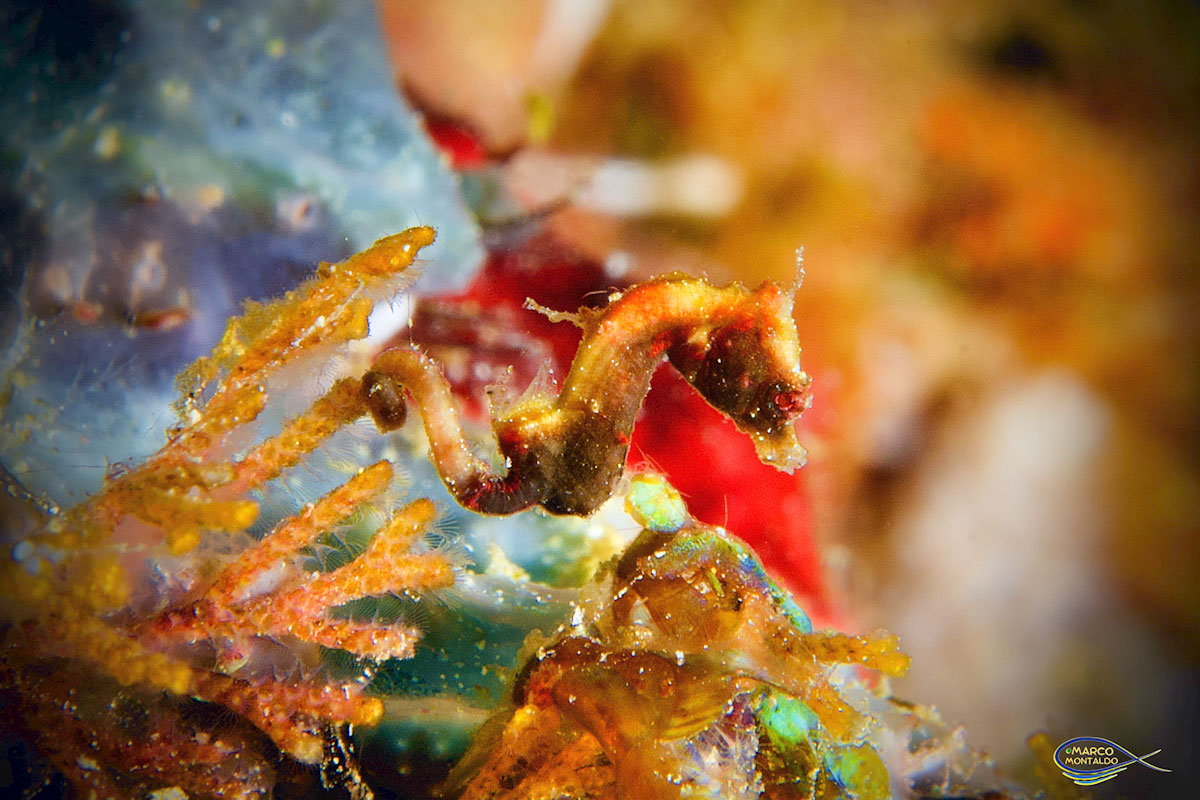
Their entire bodies are covered in bony armor; many species also feature ridges and spines, making the seahorse an unappealing target for predators.

However, camouflage is the seahorse’s true defensive weapon; with some species—especially pygmy seahorses—it is extremely difficult to distinguish them from their surroundings.

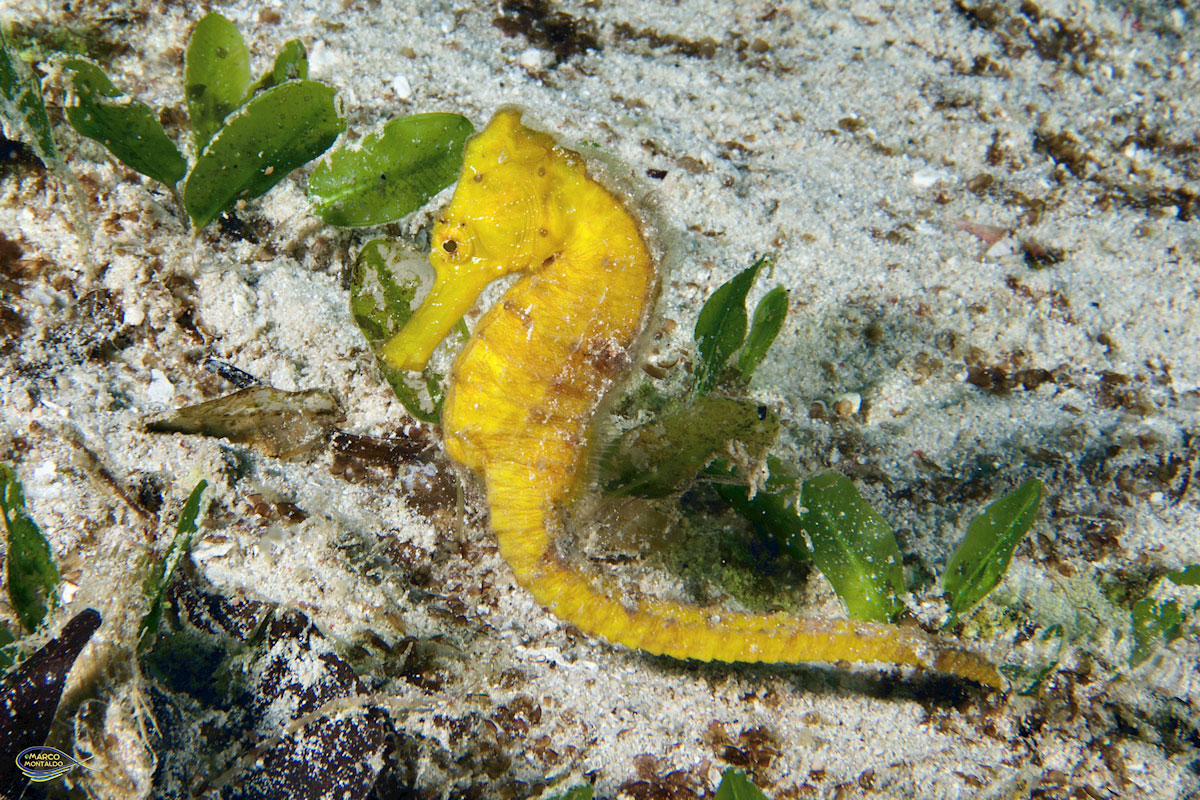
Sizes and colors vary greatly. Common colors include black, brown with shades ranging to beige, yellow, orange, and green. The coloration of pygmy seahorses is extraordinary, ranging from pink and yellow to bluish-grey with red tubercles and from red to black . They possess a swim bladder—an organ containing oxygen and other gases—which enables buoyancy and aids in swimming.
Their most astonishing characteristic is their method of reproduction.
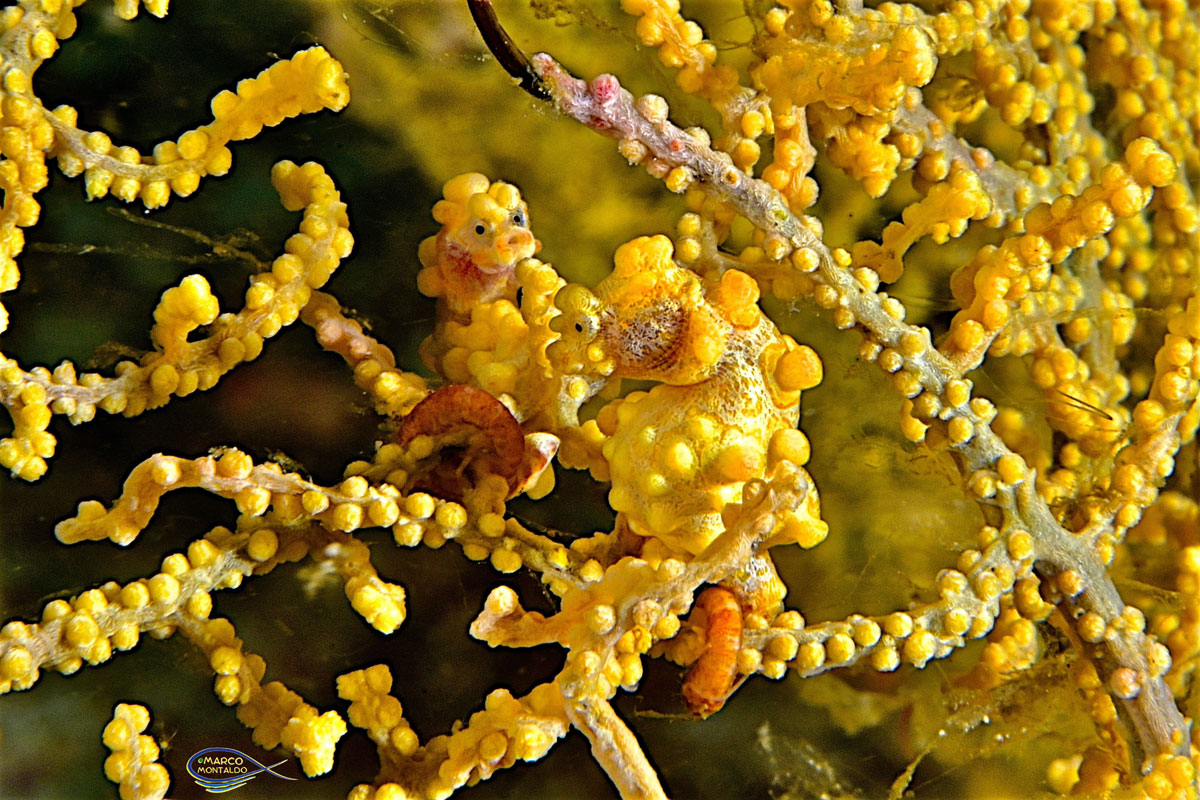
After a courtship ritual involving short swims or little dances—which can last up to two or three days—the female produces eggs and deposits them into a special pouch on the male’s belly, located near the anal opening. There, the male fertilizes and incubates them for several weeks. Upon hatching, the male expels the young through abdominal contractions similar to childbirth—a very rare phenomenon in nature known as male pregnancy. Typically, around 500 offspring are born. They are monogamous animals that form stable, lifelong pairs. Today we are lucky: we have found a pair of pygmy seahorses with rare yellow coloration, and the male is pregnant.
Despite their good-natured and somewhat clumsy appearance, they are actually excellent predators. They feed on plankton, small crustaceans, and amphipods, sucking them up through their tubular snouts at incredible speed—so fast that the action is almost invisible to the human eye. Seahorses inhabit waters across the globe, with the exception of polar regions; they are usually found near the coast, where they can find shelter and anchor themselves using their long, prehensile tails. They are abundant in coral reefs and *Posidonia oceanica* seagrass beds, or in areas where they can camouflage themselves among seaweed.
All species in the genus *Hippocampus* are listed in Appendix II of CITES (the Convention on International Trade in Endangered Species of Wild Fauna and Flora). Despite international bans, they are fished in many countries to be sold dried as souvenirs. However, the most serious threat comes from traditional Chinese medicine and practices in other Asian countries, where they are used for therapeutic purposes—particularly for the Asian market. Among the various ailments treated with seahorse-based preparations—take a guess—are impotence and infertility! Even though the absolute ineffectiveness of these preparations has been scientifically proven, these poor little fish are still slaughtered due to absurd folk beliefs. Furthermore, around twenty species are endangered due to industrial shrimp trawling.
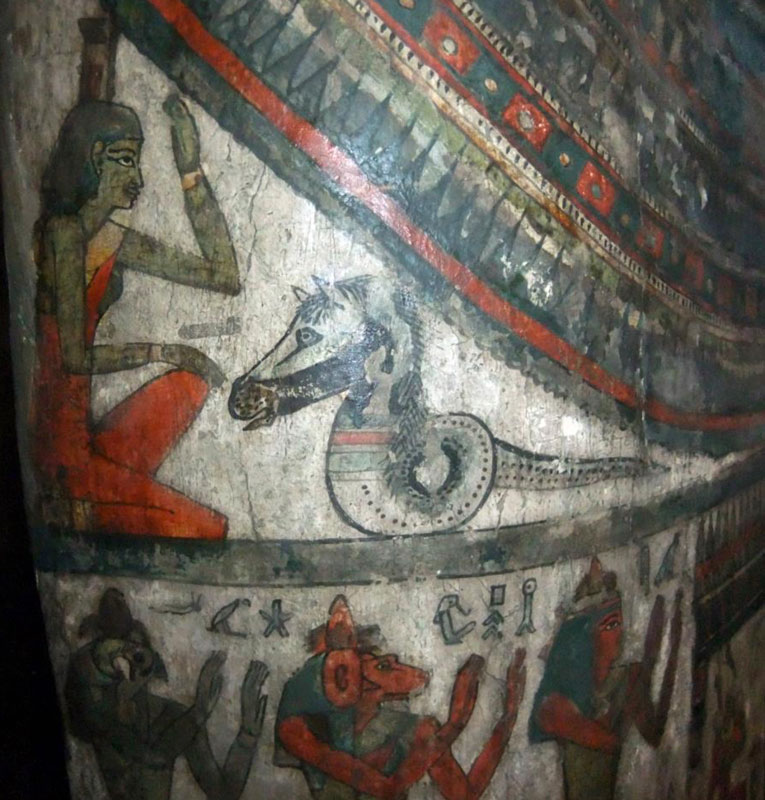
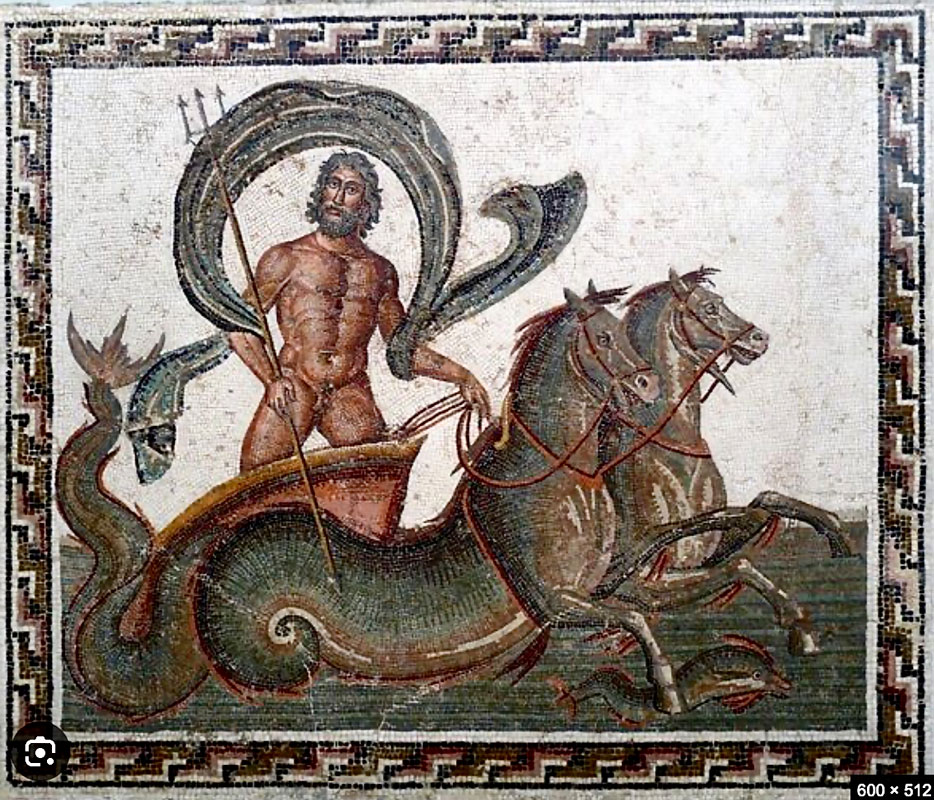
The unique appearance of seahorses captured the imagination of ancient peoples, who regarded them as divine creatures, so there are many rappresentations in ancient art that have survived.
On the Egyptian sarcophagus of Padiamun (26th Dynasty, 7th–6th century BC), housed in the Liverpool Museum, two images of seahorses are depicted at shoulder level on the outer lid.
The sarcophagus’s owner, Padiamun, served as the chief navigator of the barque of Amun.
In Greek and Roman mythology, the sea god Poseidon (Neptune) is often depicted riding a chariot drawn by hippocamps, as seen in the magnificent 3rd-century AD Roman mosaic from the Villa of Wadi Blibane (Sousse, Tunisia; Archaeological Museum), which shows Neptune on his chariot with a pair of hippocamps. Seahorses also appear in paintings and mosaics, frequently portrayed as mythological creatures.
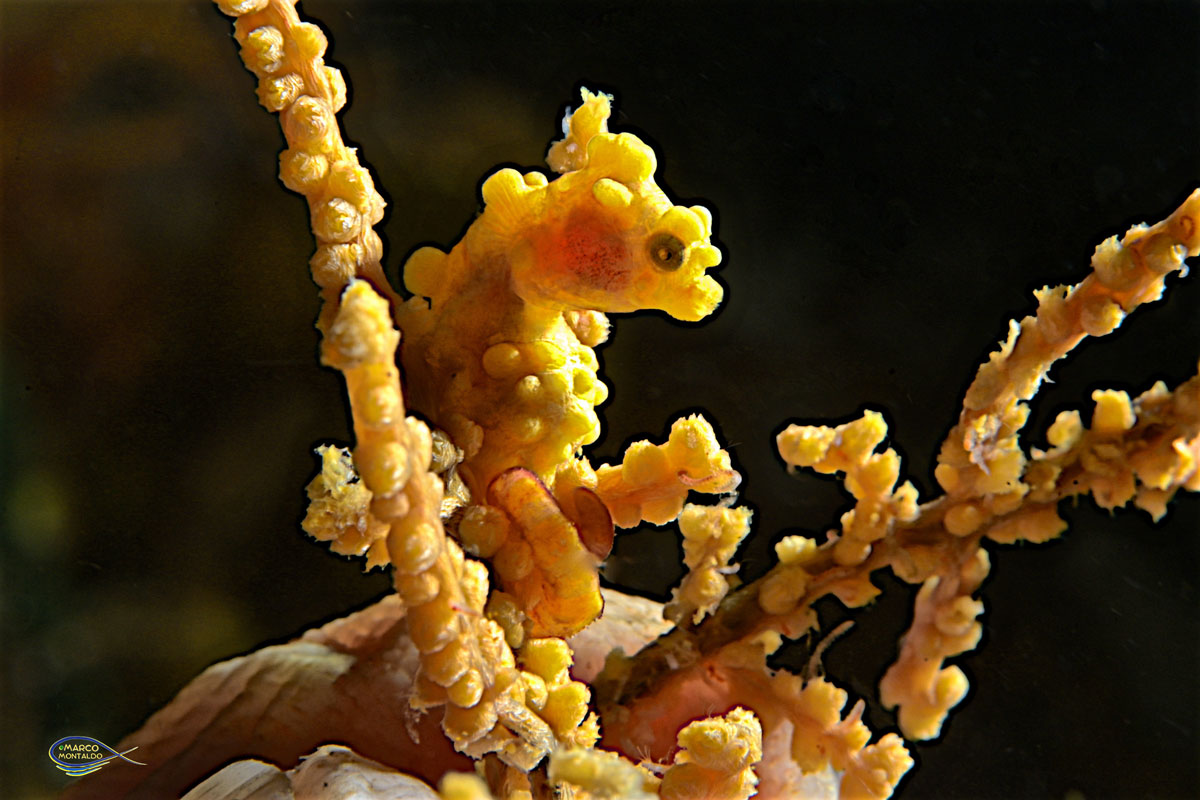
In Raja Ampat, pygmy seahorses, tiny bony fish measuring just 1 to 2 centimeters in length, deserve special mention.
Masters of camouflage, some species, such as *Hippocampus bargibanti*, feature body tubercles that mimic the polyps of the gorgonian corals (typically of the genus *Muricella*) upon which they live, rendering them virtually invisible.

They may be solitary or found in small groups of four to five individuals; during the breeding season, they are often seen in pairs, sometimes with their tails anchored to the same coral twig.

They typically inhabit depths ranging from 10 to 40 meters. They were discovered by chance in New Caledonia in 1930: a naturalist, Georges Bargibant, had collected a gorgonian branch and, upon bringing it to the laboratory, saw a tiny creature detach itself—which turned out to be a seahorse. Later, in 1970, an Australian ichthyologist named Gilbert Percy Whitley studied the animal and officially described it as a new species.
Almost nothing was known about its biology in the wild, but thanks to underwater photographers—particularly from the late 1990s and into the 2000s—more extensive documentation has become available.
A rarer variant is bright yellow.
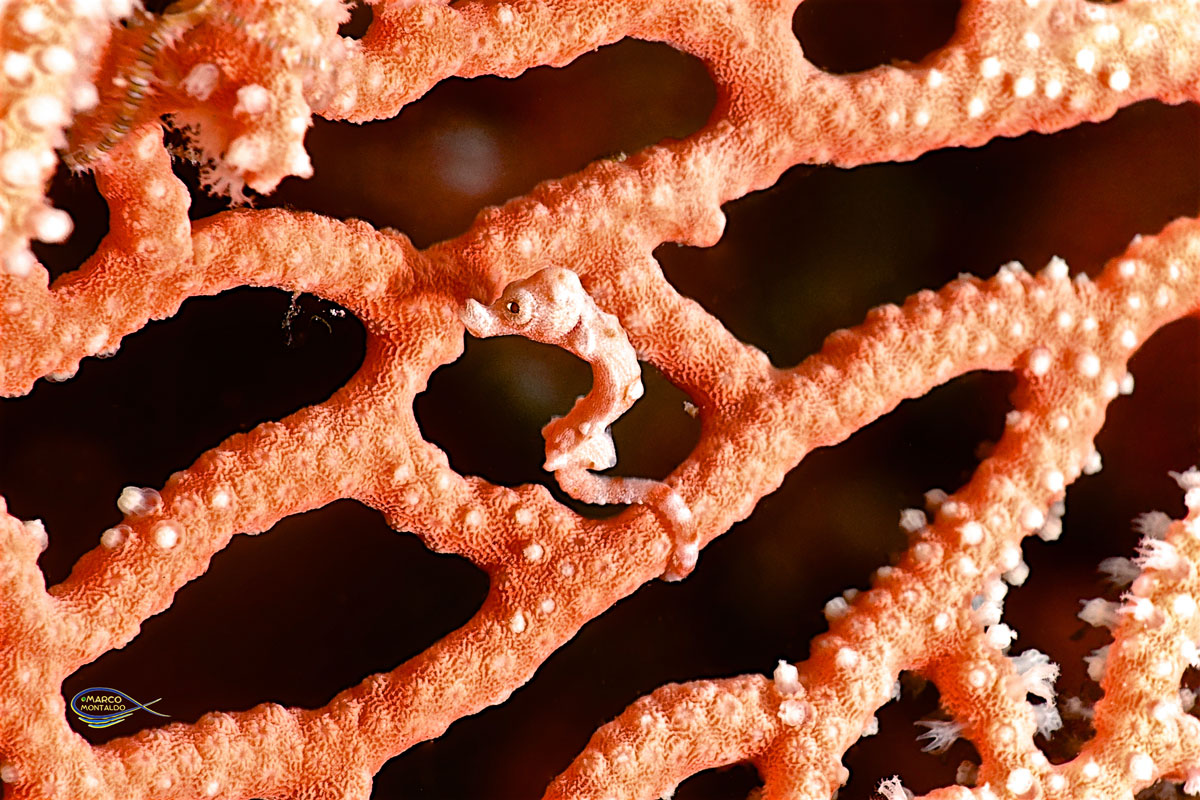
Denise’s Pygmy Seahorses (*Hippocampus denise*) are pinkish-orange, matching the exact color of the coral fan—usually *Annella reticulata*, *Muricella*, or *Echinogorgia*—on which they spend their entire lives. They are very small; their bodies are slenderer than those of other pygmy seahorses, and their snouts characteristically turn upward, giving them a somewhat sad appearance. They have been spotted at significant depths—up to 90 meters—and were only first described in 2003.
Another species, *Hippocampus pontohi*, is the smallest of them all and was only first described in 2008. They anchor themselves by their tails to bryozoans or small algae and alter their coloration to match the substrate they inhabit. They often feature dorsal appendages resembling small arms. Usually found at depths of 3 to 30 meters, they can be spotted—by those with a keen eye—in colors ranging from yellow with white spots or reddish-brown to black.
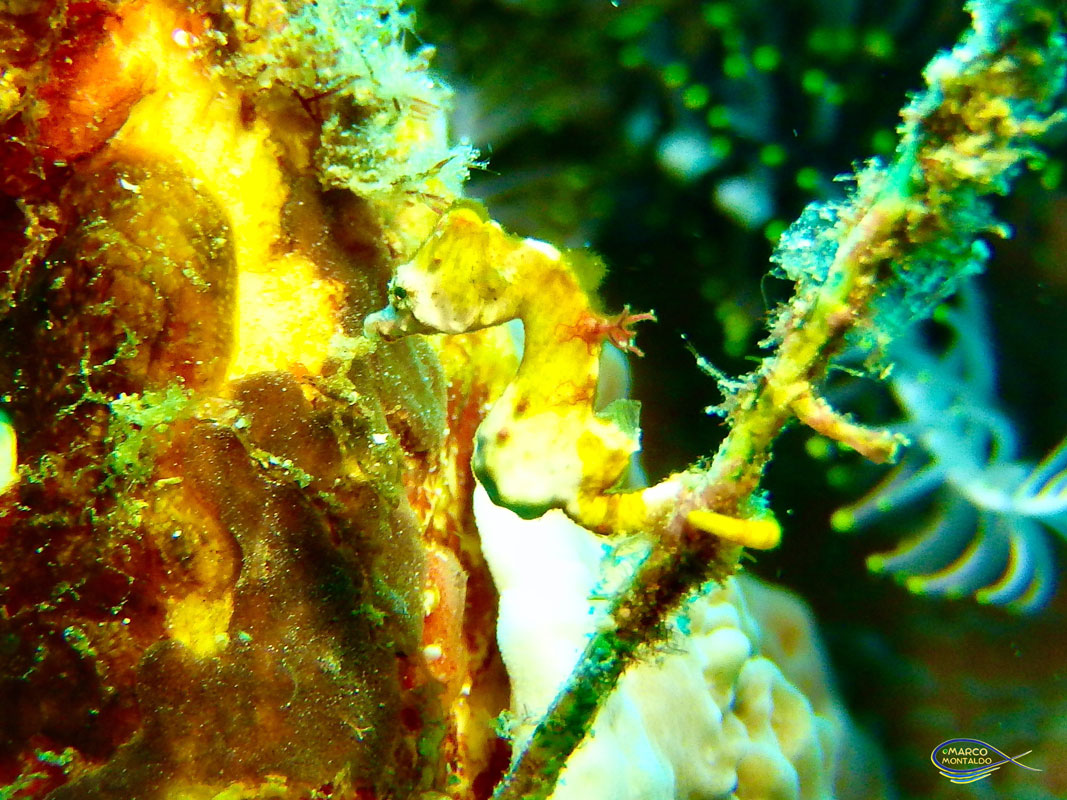
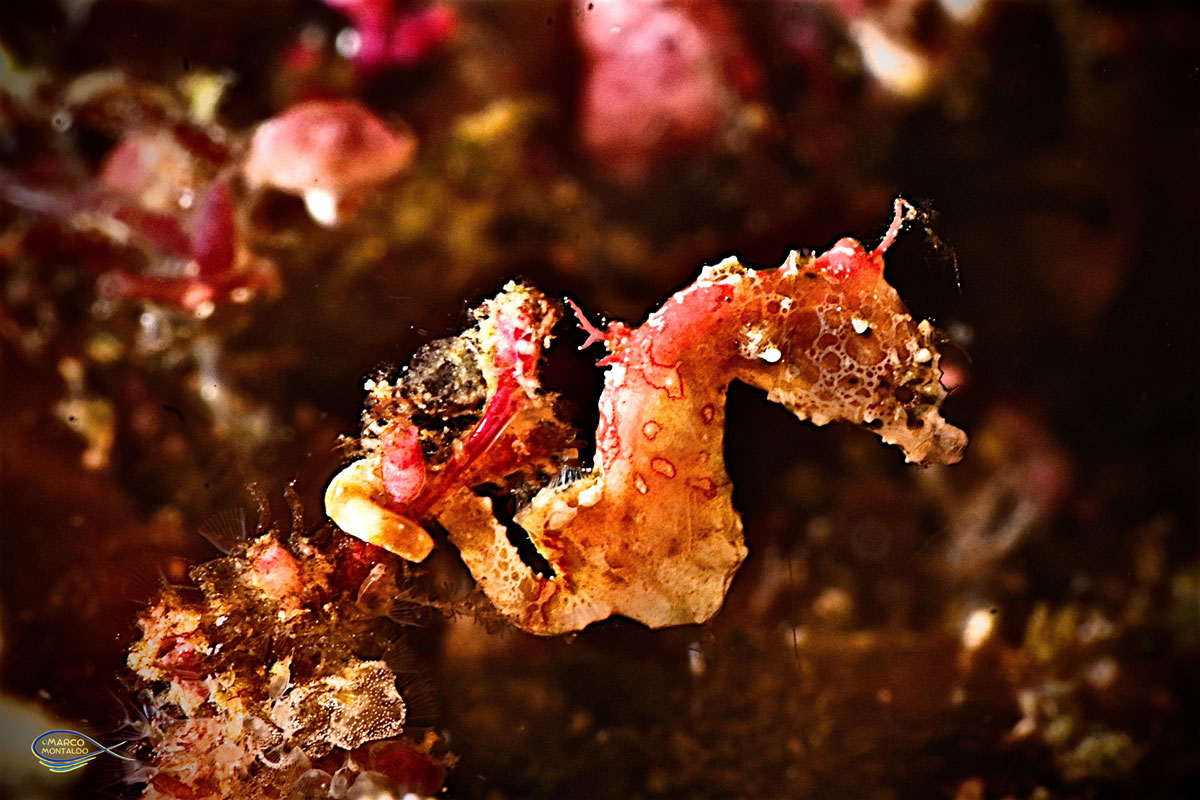
Want to see these seahorses? Trust the experience of the guides at Agusta Eco Resort. From giant oceanic manta rays to pygmy seahorses, Raja Ampat is the global center of marine biodiversity. You certainly won’t be disappointed!

